How to Practice for the Civics Test When English Is Your Second Language
The USCIS civics test is verbal — you have to say the answers out loud. If English isn't your first language, that's an extra layer of difficulty. Here's how to prepare for it specifically.
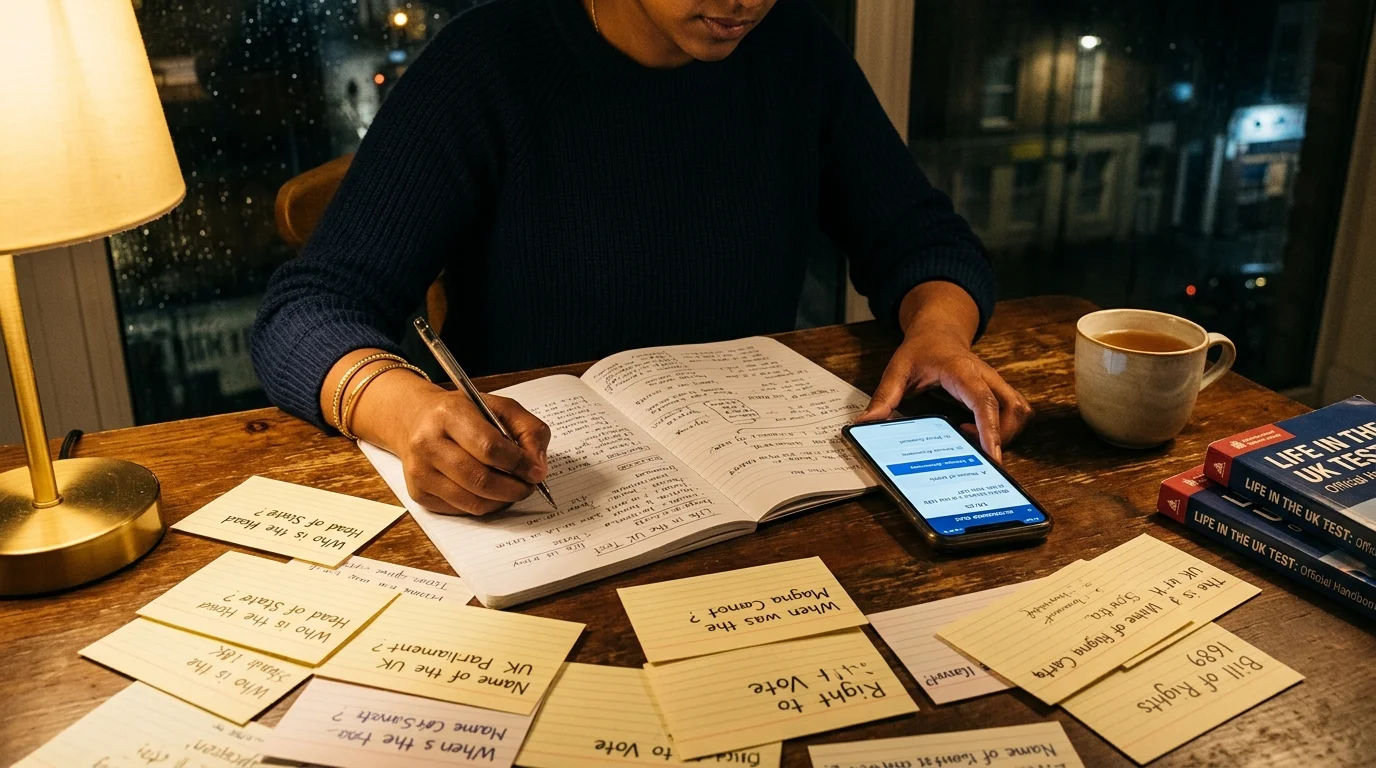
You've been in this country for years. You work here, pay taxes here, raise your family here. Your English is good enough for daily life — for conversations with neighbors, for managing your job, for navigating the city. But good-enough English and standing in front of a USCIS officer answering civics questions out loud, on command, under pressure? Those are different things.
This is the challenge that doesn't get talked about enough. Most civics study guides assume you'll just read the questions and learn the answers. They don't account for what it feels like to freeze when the officer says "Who was the first President of the United States?" — even when you absolutely know the answer in three languages.
You can pass this test. You don't need perfect English. But you do need a study method that prepares you for the spoken format, not just the written one. Here's what that actually looks like.
What the Civics Test Actually Requires of Your English
The civics portion of your naturalization interview is entirely verbal. There's no written test, no multiple-choice options, no pointing at answers. The officer asks a question. You answer it out loud. They mark it correct or incorrect and move on to the next one.
For the 2026 test, the officer will ask up to 20 questions from the pool of 128. You need to answer 12 correctly to pass. The answers USCIS accepts are short — often just a few words. "The Constitution." "The Bill of Rights." "Congress." The challenge isn't crafting complex sentences. The challenge is producing the right phrase immediately, on demand, in English, when your nervous system is in high gear.
Your English reading and writing are also tested separately. You'll read one sentence from three provided options, and write one sentence from dictation. Those portions test basic English literacy. The civics section tests civic knowledge — expressed in English, but in short, simple phrases you can absolutely learn.
Why Standard Study Methods Fall Short for ESL Learners
Most people study by reading the list of 128 questions and answers. They read them silently, maybe a few times. They feel like they know them. Then they walk into the interview and the answers don't come as fast as they expected.
This happens to everyone — but it hits harder when English is your second language. Reading in a foreign language and speaking in a foreign language on demand are two separate skills. Reading gives you recognition. The interview tests recall. That gap is where most ESL applicants lose points.
The second problem is pronunciation anxiety. Some people know the answer perfectly but hesitate to say it out loud because they worry the officer won't understand them. So they pause. They restate. They over-explain. And that hesitation can shake their confidence for the rest of the session.
The good news: both of these problems have the same solution. Practice saying the answers out loud, in English, before you're ever in the interview room.
The Study Adjustments That Actually Work
1. Learn the English answers — not just the questions
It's tempting to understand the questions in your native language and then translate your answer in the moment. Don't. The translation step costs you time and introduces uncertainty. Instead, memorize the exact English phrase USCIS accepts as a correct answer.
"The Constitution." Not "La Constitución." Not "the law of the country." Exactly: "the Constitution."
This isn't about hiding your background. It's about building a direct wire between the question and the English answer, so retrieval is automatic rather than translated.
2. Use USCIS audio — listen to the correct phrasing
USCIS provides free civics test study materials, including audio recordings of all 128 questions and answers read aloud. This is one of the most underused resources for ESL learners. You can hear exactly how the question is phrased and exactly what a correct answer sounds like — not just read it.
Listen to sections while commuting, washing dishes, or exercising. Your ear will start recognizing the questions before your brain consciously processes them. That automaticity is exactly what you need in the room.
3. Say every answer out loud, every time you practice
Silent review builds recognition. Spoken practice builds the actual skill the interview tests. Set a rule: if you're reviewing civics questions, you say the answer out loud every single time — no exceptions. Even alone in your car. Even if it feels awkward. Especially if it feels awkward.
For a deeper look at how to build verbal recall for the civics test, including techniques for practicing under pressure, that guide walks through the specific method step by step.
4. Record yourself once a week
Use your phone. Run through 20 random questions, answer each one out loud, and play it back. You'll hear exactly where you hesitate, mispronounce, or lose confidence. You'll also hear yourself improve over time — which is its own kind of motivation. Most people find that their pronunciation is clearer than they feared.
5. Practice with a study partner
Having someone ask you the questions out loud — a family member, a friend, a neighbor — is more effective than reviewing alone. The social context adds a small layer of pressure that more closely resembles the actual interview. It also forces you to produce answers rather than just recognize them.
If you don't have a study partner available, the FutureCitizen.us free AI simulator plays the role of the USCIS officer: it asks the real questions one by one, speaks them out loud, and gives you immediate feedback. You can practice at any hour, for as long as you want, with no signup required.
Practice These Questions — The Answers That Trip ESL Learners Up
Some answers require exact phrasing. These are the ones that catch ESL applicants off guard — not because the knowledge is hard, but because the English phrase needs to come out precisely.
USCIS Question: What is the supreme law of the land?
USCIS Question: What does the Constitution do?
USCIS Question: What is freedom of religion?
The third question is a good example. The instinct is to answer "you can choose your religion" — which is correct in spirit but not in USCIS's accepted phrasing. The accepted answer also includes the phrase "or not practice a religion," which many people leave out. Practice the exact phrase until it comes out automatically.
The Language Exemptions You May Qualify For
USCIS provides two language exemptions that allow qualified applicants to take the civics interview through a certified interpreter — meaning the officer's questions are interpreted into your language, and your answers are interpreted back into English.
The 50/20 rule: If you are 50 years or older and have lived as a lawful permanent resident for at least 20 years, you qualify to bring a certified interpreter to your naturalization interview.
The 55/15 rule: If you are 55 years or older with at least 15 years as a lawful permanent resident, the same interpreter option applies.
One critical note: these exemptions cover the language of the interview, not the civics content. You still have to answer all the civics questions correctly. The interpreter makes the verbal exchange easier, but you still need to know the material. Also note that these are different from the over-65 civics question reduction, which reduces the question pool to 20 specially marked questions — a separate benefit for older applicants.
If you think you may qualify for either exemption, consult a licensed immigration attorney who can confirm your eligibility based on your specific record. The Immigrant Legal Resource Center maintains a directory of nonprofit legal service providers if cost is a concern.
What a Weekly Practice Schedule Looks Like
Consistency beats intensity. Three 20-minute sessions a week — spoken, using the audio or the simulator — will do more than a four-hour cramming session the night before your interview.
A simple schedule that works for most ESL applicants:
- Monday / Wednesday: 20 minutes of flashcard review — say every answer out loud
- Saturday: One full spoken practice session — all 128 questions or a randomized subset, no notes
- Ongoing: Audio recordings during commute or chores
If you're starting eight weeks out, use the first four weeks to learn the material in chunks — government structure, then history, then rights and responsibilities. Use the second four weeks entirely for spoken recall, with no notes. That's the phase that builds the retrieval reflex the interview actually tests.
For the complete eight-week study plan — with week-by-week guidance, category breakdowns, and tips for locking in the current-date answers — see the full citizenship civics study guide.
A Note on Immigration Statistics and Language
You're not alone in this. The vast majority of naturalization applicants in the United States were born in another country and came to English as adults. According to U.S. Census Bureau data, the foreign-born population includes people from every linguistic background — and the naturalization rate has remained steady precisely because people prepare seriously and pass. Research from the Pew Research Center consistently shows that immigrants who pursue citizenship do so after years of building a life in this country. The civics test is designed to be passable — not as a trap, but as a genuine check of civic knowledge that most prepared applicants clear.
The test is hard enough to take seriously. It's not so hard that you should fear it. The people who struggle are almost always the ones who studied passively — reading the list without practicing retrieval, without saying answers out loud. Fix the study method, and the language challenge becomes much more manageable than it felt at first.
You've learned a new language. You've built a life here. You've made it to the point of applying for citizenship. The civics test is one more thing to prepare for — and now you know exactly how to prepare for it.
Practice These Questions Out Loud
Reading study tips is the first step. The second step is actually saying the answers out loud — on demand, question by question, just like the real interview. Our free AI officer asks the official USCIS civics questions and gives you immediate feedback. No signup, no cost.
Start Free Practice →