The Test Will Ask How a Law Gets Made. Most People Can't Answer It Cold.
Congress makes federal law — but the process has six steps, two chambers, and a presidential decision point. Here's how it all works, and exactly what the USCIS civics test expects you to know.
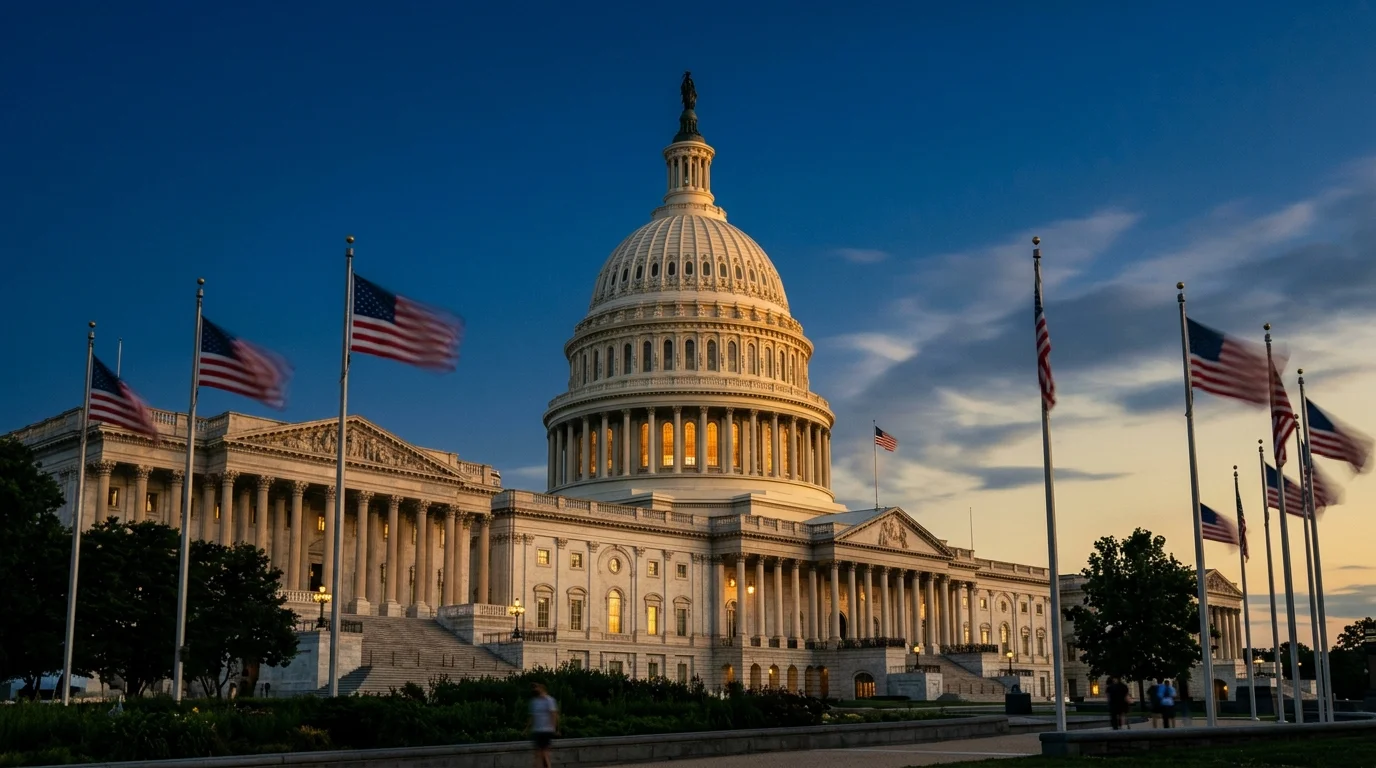
You're sitting across from a USCIS officer. You've answered questions about the three branches, the Bill of Rights, and the Civil War. Then comes a question that sounds simple: "Who makes federal laws?"
You know it's Congress. But then the follow-up: what does Congress actually do? How does a law get made? What stops one part of Congress from just steamrolling everyone else?
These aren't trick questions. But they're the kind of questions where reading the answer is different from being able to say it — clearly, confidently, under a little pressure. Here's everything you need to know.
The Short Answer
Congress is the legislative branch of the US government. Its main job is to make federal laws. Congress has two chambers: the Senate (100 senators, 2 per state) and the House of Representatives (435 members, allocated by state population). Both chambers must pass the same version of a bill before it can become law. The President then signs or vetoes it.
What Is Congress?
Congress is established in Article I of the Constitution — the very first article, because the Founders believed the legislature should be the primary branch of government. Congress represents the people directly: the House through population-based representation, the Senate through equal representation of each state.
USCIS Question 16: Who makes federal laws?
USCIS Question 17: What are the two parts of the US Congress?
The House of Representatives
The House has 435 voting members. Every state gets at least one representative; the rest are distributed based on population from the most recent census. California has the most (54 representatives). States like Wyoming and Vermont have only 1.
Representatives serve two-year terms — the shortest of any federal office. They face re-election frequently, which means they're closely tied to current public opinion. The House is where spending bills must originate. It also has the sole power to impeach a President or federal official.
USCIS Question 27: The House of Representatives has how many voting members?
The Senate
The Senate has 100 senators — exactly 2 per state, regardless of population. Wyoming and California each have 2. This structure was a deliberate compromise at the Constitutional Convention: the House gives larger states more representation, while the Senate gives every state equal standing.
Senators serve six-year terms, staggered so roughly one-third of the Senate faces re-election every two years. The Senate has unique powers the House doesn't: it confirms presidential nominations to the Supreme Court, ambassadorships, and cabinet positions. It also holds trial when someone is impeached.
USCIS Question 28: The Senate has how many voting members?
USCIS Question 26: We elect a US Senator for how many years?
How a Bill Becomes a Law: The Six Steps
This is the part most people know vaguely but struggle to explain precisely. Here it is, step by step:
Step 1: Introduction
Any member of the House or Senate can introduce a bill. They drop it in a literal box called "the hopper" in the House, or hand it directly to the Senate clerk. A bill can originate in either chamber — except tax and spending bills, which must start in the House.
Step 2: Committee Review
The bill is assigned to a committee that specializes in that subject. Most bills die here. The committee may hold hearings, take testimony, amend the bill, or simply never schedule a vote. A bill that survives committee review is "reported out" to the full chamber floor.
Step 3: Floor Vote in the First Chamber
The full House or Senate debates the bill and votes. In the House, a simple majority (218 of 435) passes it. The Senate can require 60 votes to overcome a filibuster — a procedural tactic that can block a vote indefinitely. If the bill passes, it goes to the other chamber.
Step 4: Second Chamber Review and Vote
The other chamber repeats the process: committee review, possible amendments, floor debate, and vote. If that chamber passes an identical version, it goes directly to the President. If they change it, the two chambers must reconcile their differences — usually in a "conference committee" — and both vote again on the final version.
Step 5: Presidential Action
The President has four options: sign the bill into law; veto it (send it back to Congress with objections); take no action for 10 days while Congress is in session (it becomes law automatically); or take no action for 10 days when Congress is adjourned (it dies — called a "pocket veto").
Step 6: Veto Override (If Necessary)
If the President vetoes a bill, Congress can override it with a two-thirds supermajority vote in both chambers. This is rare — it requires broad bipartisan agreement. Most vetoes stand.
Checks and Balances: Why the System Works This Way
The Founders were deeply worried about concentrated power. They designed a system where no single branch could act unilaterally. Congress makes laws — but the President can veto them. The President nominates judges — but the Senate must confirm them. The Supreme Court can strike down laws as unconstitutional — providing a check on Congress itself.
USCIS Question 14: What stops one branch of government from becoming too powerful?
This idea didn't appear from nowhere. It drew heavily on European political theory — particularly the French philosopher Montesquieu — and on the colonists' direct experience with concentrated royal power. The National Archives founding documents collection has the original Constitutional text and the debates that shaped these choices, if you want to go deeper.
Congress and the USCIS Civics Test
The civics test has more questions about Congress than any other topic. Here are the ones that require specific numbers — these are the most commonly missed:
- 435 — voting members of the House
- 100 — senators
- 2 — senators per state
- 2 years — term for a US Representative
- 6 years — term for a US Senator
You'll also need to know the name of your own senators and representative — those are personal to your state. To look them up, congress.gov has a zip-code lookup that shows all current members.
For broader context on how Congress fits into the constitutional system, Khan Academy's US government foundations course is free and thorough — useful if you want video explanations alongside the written material.
Congress is one of three branches — and the three branches of government guide covers how the legislative, executive, and judicial branches check each other, which is essential context for the civics test. If you want to practice saying all of this out loud — the numbers, the structure, the checks and balances — instead of just reading it, that's what FutureCitizen.us is for. The free simulator puts you in a simulated USCIS interview, one question at a time, and asks you to answer out loud. Practice that gap at futurecitizen.us before your appointment.
Can You Name Both of Your Senators Right Now?
The civics test will ask you. So will questions about 435, 100, and 6 years. Our free AI officer runs you through the real USCIS questions — including the Congress section — one at a time, in interview format. Know the answers. Say them out loud.
Start Free Practice →