It's on Your Civics Test — and Most People Get It Wrong. Here's How the Electoral College Actually Works.
Plain-English: electors, the 270-vote threshold, what happens when there's no winner — and the USCIS civics questions connected to it.
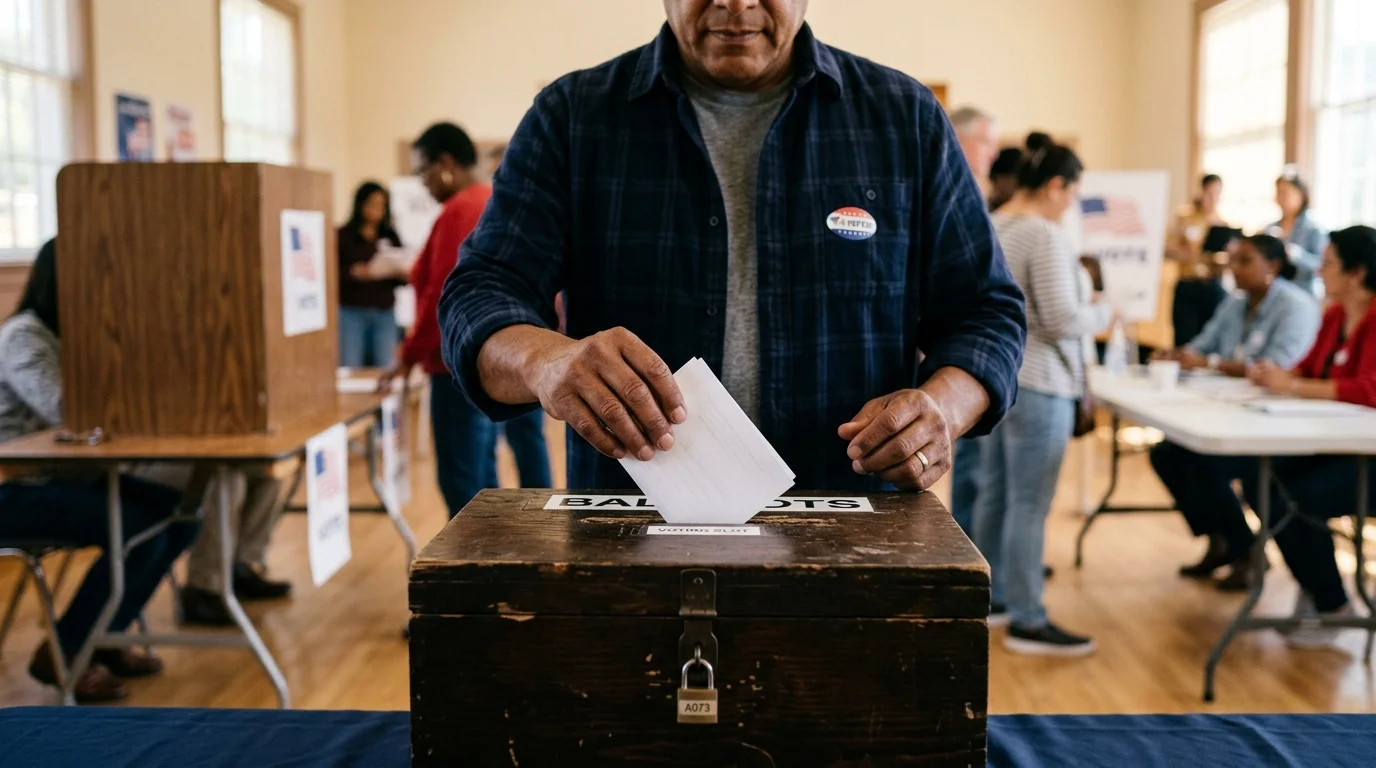
You've seen the election maps. Red states, blue states, numbers adding up toward 270. You've watched a candidate win states and still lose the presidency. And now that you're studying for your civics test, you need to be able to explain the system — not just recognize it.
Most people who've lived in the US for years still can't explain how the Electoral College actually works. They know it exists. They can't explain why a candidate needs 270 votes, or what happens if nobody gets there.
The Electoral College is how the United States elects its President. Citizens vote for President in November, but those votes don't go directly to the candidates — they go to electors who are pledged to those candidates. The electors then cast the official vote for President. A candidate who gets 270 or more electoral votes wins.
Why the Electoral College Exists
The Framers debated how to elect a president throughout the Constitutional Convention in 1787. Some wanted Congress to choose the President. Others wanted a direct popular vote. The Electoral College was a compromise — it kept states involved in the process while avoiding a purely congressional selection that could tie the presidency too closely to legislative politics.
The full history of that decision is documented at the National Archives Electoral College page, which also explains how the system has changed through amendments over time. The Twelfth Amendment (1804) changed how President and Vice President are elected; the Twenty-Third Amendment (1961) gave Washington D.C. electoral votes for the first time.
How the Numbers Work
Each state gets a number of electors equal to its total number of congressional seats — that's its House representatives plus its two senators. California, the most populous state, has 52 House representatives and 2 senators, giving it 54 electoral votes. Wyoming, the least populous, has 1 representative and 2 senators, giving it 3.
Washington D.C. gets 3 electoral votes under the Twenty-Third Amendment, even though it has no voting representation in Congress.
Add it all up: 435 House seats + 100 Senate seats + 3 for D.C. = 538 total electoral votes. A candidate needs a majority — at least 270 — to win.
USCIS Question 27: In what month do we vote for President?
USCIS Question 26: We elect a President for how many years?
How Electors Are Chosen and How They Vote
Each state's political parties select slates of electors before the election. When voters in a state cast their ballot for President, they're actually voting for that candidate's slate of electors. In 48 states plus D.C., the candidate who wins the statewide popular vote receives all of that state's electoral votes — winner-take-all. Maine and Nebraska use a different system, allocating some electoral votes by congressional district.
After Election Day in November, the winning electors in each state meet in December to cast their official votes. Those votes are counted by Congress in January. The Senate's role in this process is to preside over the joint session where the votes are certified.
What Happens If Nobody Reaches 270
If no candidate receives 270 electoral votes — because a third-party candidate splits the vote, or for any other reason — the election goes to the House of Representatives. Each state delegation in the House gets one vote. The candidate who wins a majority of state delegations (26 out of 50) becomes President. This happened in 1800 (Thomas Jefferson vs. Aaron Burr) and 1824 (John Quincy Adams vs. Andrew Jackson).
USCIS Question 25: Why do some states have more Representatives than other states?
Why This Matters Beyond the Test
Understanding the Electoral College matters for your civics test — questions about the President, election month, and the structure of Congress all connect to it. But it also matters because as a citizen, you'll participate in this system directly. Your vote in November shapes which electors are sent to cast the official vote.
The test asks you to know the month, the term length, and the basics of how the executive branch is elected. But the bigger picture — why it's structured this way, how your vote connects to the outcome — is the kind of knowledge that makes citizenship feel real rather than abstract.
Reading about it gets you to recognition. What the USCIS interview actually tests is retrieval: can you answer "In what month do we vote for President?" out loud, immediately, without hesitation? That's a different skill — and the only way to build it is to practice the spoken format before your interview date arrives.
You've Read How It Works. Now Answer the Questions Out Loud.
The Electoral College, the President's term, election month, Congress — these government questions make up more of the 128-question pool than any other category. FutureCitizen.us is a free AI simulator that asks you the real USCIS questions one at a time, out loud, just like your actual interview. No reading, no multiple choice — just you and the questions. Start right now and find out which government answers are locked in and which ones need more work.
Start the Free Simulator →