You've Studied 128 Questions. The Last Step Is 140 Words Out Loud.
The Oath of Allegiance is what turns an approved N-400 application into citizenship. Here's what those 140 words actually commit you to — and what happens at the ceremony.
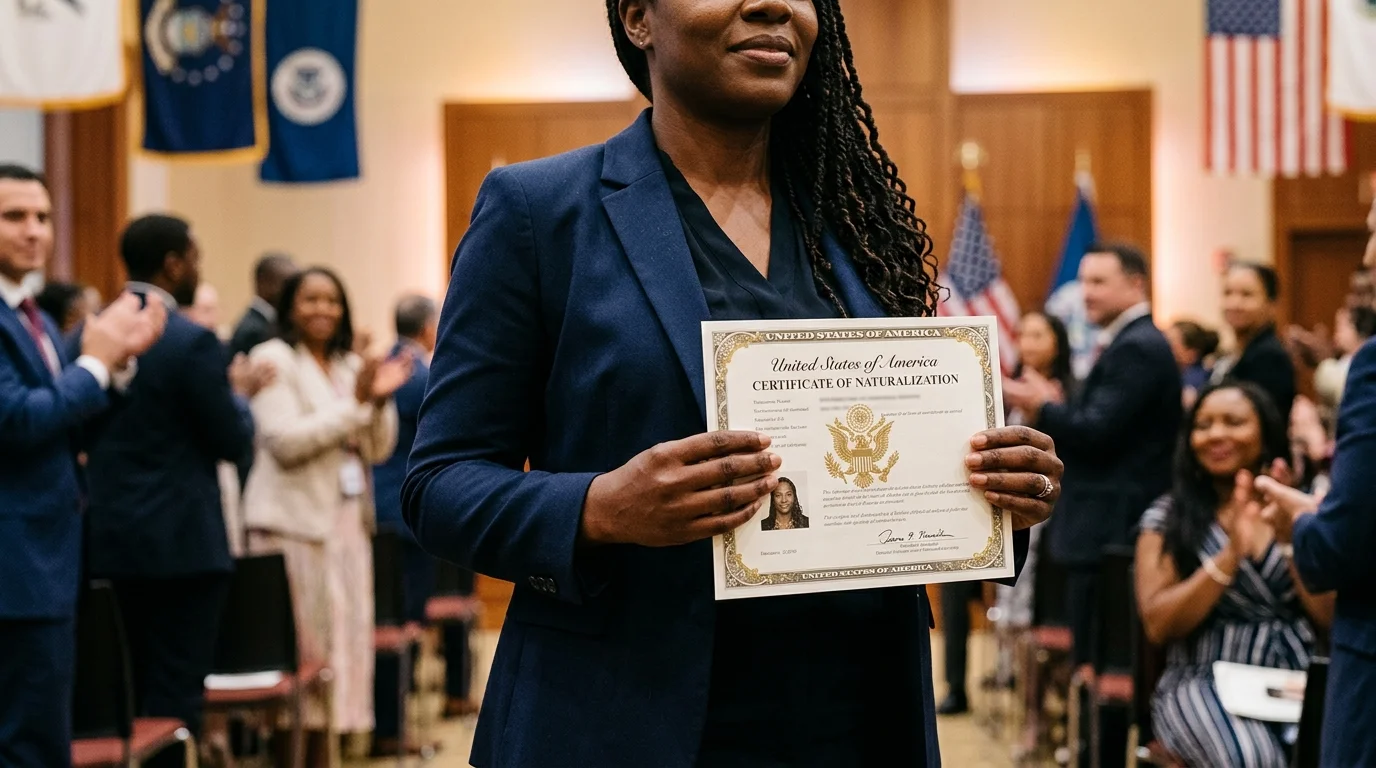
The interview is behind you. The civics questions, the English test, the biographical questions — all of it. You've passed. And now you're waiting for a letter that tells you when and where to show up for your ceremony.
After years of applications, waiting, fingerprints, and interviews, citizenship comes down to one final act: raising your right hand and saying a 140-word oath.
Most people know the oath exists. Fewer know what it actually says, what each clause commits you to, or what happens in the room. Here's all of it.
The Full Text of the Oath
This is the official Oath of Allegiance, as required by the Immigration and Nationality Act (INA Section 337):
"I hereby declare, on oath, that I absolutely and entirely renounce and abjure all allegiance and fidelity to any foreign prince, potentate, state, or sovereignty, of whom or which I have heretofore been a subject or citizen; that I will support and defend the Constitution and laws of the United States of America against all enemies, foreign and domestic; that I will bear true faith and allegiance to the same; that I will bear arms on behalf of the United States when required by the law; that I will perform noncombatant service in the Armed Forces of the United States when required by the law; that I will perform work of national importance under civilian direction when required by the law; and that I take this obligation freely, without any mental reservation or purpose of evasion; so help me God."
That's it. 140 words. But each clause carries specific legal weight — it's worth knowing what you're actually agreeing to.
What Each Part Means
"Absolutely and entirely renounce and abjure all allegiance and fidelity to any foreign prince, potentate, state, or sovereignty"
This is the renunciation clause. You are formally giving up your legal allegiance to any country you were previously a citizen or subject of. The word "abjure" means to solemnly swear off. This doesn't automatically cancel your other passport — whether you lose foreign citizenship depends on your other country's laws, which vary widely. The United States doesn't generally require you to formally renounce other citizenship, but this clause makes clear where your legal loyalty now lies.
"Support and defend the Constitution and laws of the United States against all enemies, foreign and domestic"
This mirrors the oath taken by military members and federal officials. You're pledging not just to follow US law, but to actively support the constitutional system that underlies it.
"Bear arms on behalf of the United States when required by the law" / "Perform noncombatant service"
These two clauses state your willingness to serve in the military if called upon — either in a combat role or a noncombatant capacity. In practice, the US has not had a military draft since 1973. But the legal obligation exists. People with sincere religious objections can request a modified oath that removes the "bear arms" clause while still committing to noncombatant service or work of national importance.
"I take this obligation freely, without any mental reservation or purpose of evasion"
This clause confirms that the oath is voluntary and not made under duress or with the private intent to ignore its commitments. It reinforces that naturalization is a meaningful, considered act.
USCIS Question 57: What is one promise you make when you become a United States citizen?
What Happens at the Ceremony
Oath ceremonies come in two forms: administrative ceremonies and judicial ceremonies.
An administrative ceremony is conducted by a USCIS officer, often at the field office where your interview took place. Some field offices offer same-day administrative ceremonies immediately after a successful interview. Others schedule them separately, sometimes within days, sometimes weeks. You'll receive a Form N-445 notice telling you when and where to appear.
A judicial ceremony is presided over by a federal or state judge in a courtroom. These are often more formal and may include larger groups of new citizens. Some are held at historic sites — libraries, national monuments, battlefields. USCIS makes these available on major civic holidays like Independence Day and Constitution Day.
What happens in the room, regardless of format:
- You check in and USCIS staff verify that nothing has changed in your application since your interview (they'll ask you about travel, arrests, or any other changes on Form N-445).
- The presiding official gives brief remarks.
- You stand, raise your right hand, and recite or repeat the Oath of Allegiance.
- You receive your Certificate of Naturalization — the official document proving your citizenship.
- The presiding official may invite you to say the Pledge of Allegiance as a group.
The moment you complete the oath, you are a United States citizen. Not when you submit your application. Not when USCIS approves your interview. When you say those words and receive your certificate — that is when it's official.
After the Ceremony
With your Certificate of Naturalization, you can immediately begin applying for a US passport. You're also eligible to vote in federal, state, and local elections. If you're a man and between 18 and 25, verify whether you need to register with the Selective Service (naturalized male citizens have this obligation, same as those born here).
Your green card is no longer valid — it should be surrendered or destroyed. USA.gov's naturalization overview has a checklist of steps to take after your ceremony, including updating your Social Security record, employer records, and bank information to reflect your new citizenship status.
For more on rights and responsibilities that come with citizenship — including what the civics test says about them — our article on citizen rights and responsibilities covers the full picture.
What About the "So Help Me God" Clause?
The phrase "so help me God" appears at the end of the standard oath. If you object to this language on religious grounds, you may omit it. Federal courts have affirmed that this option exists. You don't need to file paperwork to take the oath without it — you can simply not say that phrase.
Similarly, as noted above, applicants with sincere religious objections to bearing arms can request a modified oath. This requires documentation and advance notice to USCIS; the Immigrant Legal Resource Center has guidance on the process for religious objectors.
The USCIS Civics Test Knows About the Oath
The Oath of Allegiance isn't just the ceremony's finale — it's directly connected to the civics test. Question 57 asks about the promises made during naturalization. The accepted answers map directly to the oath's clauses: giving up loyalty to other countries, defending the Constitution, obeying the laws, serving if needed, being loyal to the United States.
Understanding what the oath actually means makes that question trivial. But you still need to say the answer out loud, clearly, when the officer asks — along with 19 other questions. For everything leading up to this moment, see our full guide on what to expect at your USCIS naturalization interview. And if you haven't practiced answering the civics questions under pressure, the free simulator at FutureCitizen.us is built exactly for that: a USCIS interview format where an AI officer asks you the real questions one at a time and you answer out loud, just like the day you earn the right to take that oath.
Practice Before the Ceremony — Not After
The oath is your final step. The civics test is the step before. Our free AI officer asks you the real USCIS questions one at a time, in interview format — so when Question 57 comes up, you're ready for it.
Start Free Practice →