Nine Justices. Lifetime Appointments. Here's What the USCIS Civics Test Expects You to Know About the Supreme Court.
Most people know the number. Far fewer can explain what the Court actually does — and that's the part the officer will press on. Here's everything you need.
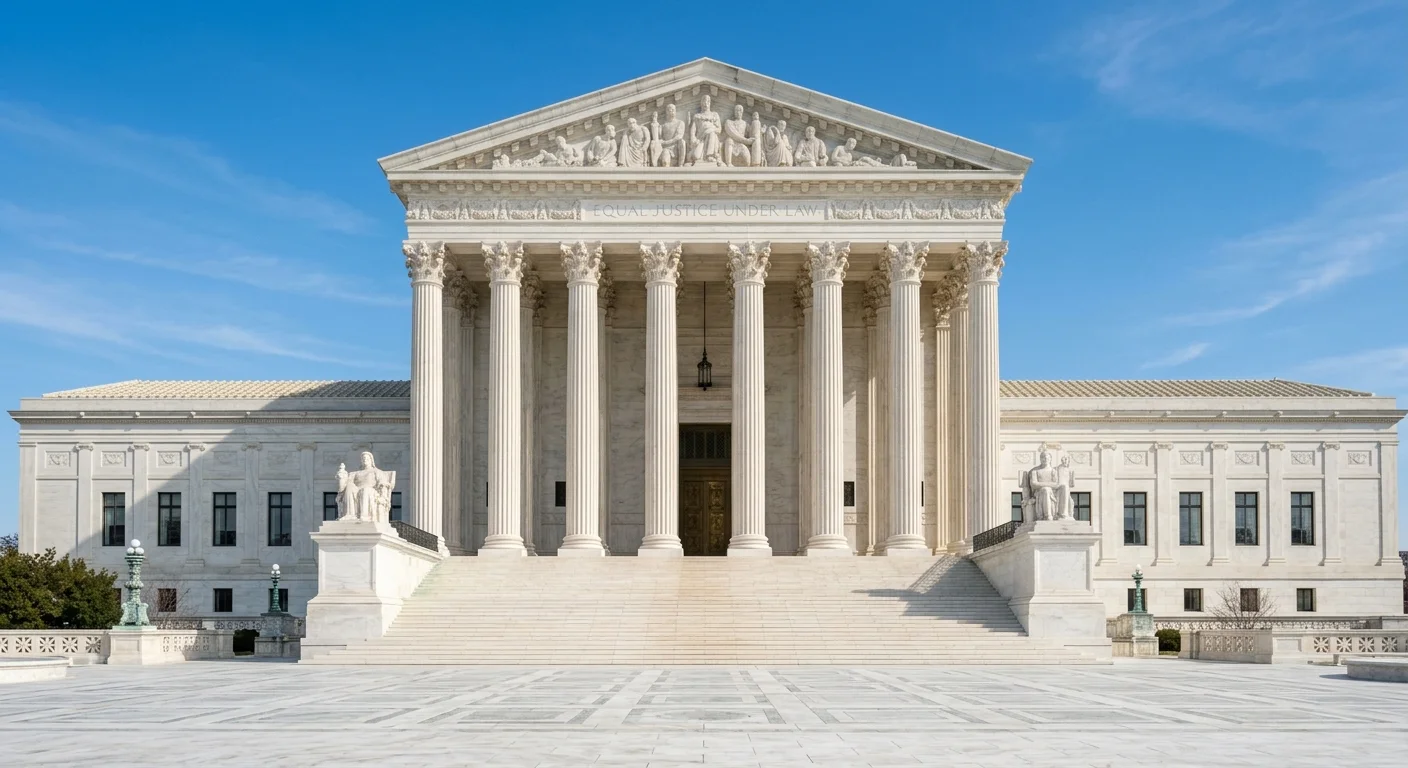
The flashcard says "How many justices are on the Supreme Court?" Nine. You've had that one locked in for two weeks. But the officer sets it aside and asks the follow-up: "What does the Supreme Court do?" And for a second — just a second — your mind goes blank. You know the number. But the answer to the real question is somewhere just past the edge of your memory.
That's the gap this article closes. The Supreme Court comes up in multiple civics questions, and knowing just the number isn't enough. The officer wants to know that you understand what the Court actually is — what power it holds, why it was built the way it was, and where it fits in the government you're about to join.
Here's everything you need, starting with the answer that matters most.
What Is the Supreme Court?
The Supreme Court is the highest court in the United States. It sits at the top of the judicial branch — the third branch of the federal government, alongside Congress (legislative) and the President (executive). Its decisions are final. There is no court above it. If the Supreme Court rules on a question of federal law or the Constitution, that ruling stands until either the Court overturns itself or Congress amends the Constitution.
The Court's most important power is called judicial review — the authority to decide whether a law passed by Congress or an action taken by the executive branch violates the Constitution. The Founders didn't write "judicial review" into the text of the Constitution itself; the Court established this power in the 1803 case Marbury v. Madison. It has been the foundation of the Court's role ever since.
USCIS Question: What is the highest court in the United States?
USCIS Question: What does the judicial branch do?
Nine Justices — and Why the Number Isn't Fixed
The Supreme Court currently has nine justices: eight Associate Justices and one Chief Justice of the United States. The Chief Justice presides over the Court, leads oral argument, and — when the Court rules — writes or assigns the majority opinion when in the majority.
Here's something the civics test doesn't ask but is worth knowing: the Constitution never specifies how many justices there should be. The number nine has been in place since 1869 — set by Congress, not the Constitution. Congress has changed the number several times throughout history, and it retains the legal power to change it again.
USCIS Question: How many justices are on the Supreme Court?
The USCIS test also asks who the current Chief Justice is. As of 2026, the Chief Justice of the United States is John G. Roberts, Jr. This is the kind of answer that can change — so always check the Supreme Court's official website before your interview if you're unsure.
USCIS Question: Who is the Chief Justice of the United States now?
Lifetime Appointments — and Why the Founders Designed It That Way
Supreme Court justices serve for life. They are nominated by the President, confirmed by the Senate, and then they hold their seat until they resign, retire, or are removed through impeachment. In practice, justices often serve for decades. Some serve past the age of 80.
The life tenure isn't an accident. It's a deliberate design choice. The Founders, who built the system carefully after seeing what happened when courts were subject to political pressure, wanted federal judges to be insulated from the short-term swings of elections and public opinion. A judge who doesn't need to win reelection is, in theory, freer to follow the law rather than the crowd.
The original justification for this structure is laid out in the Federalist Papers — a set of essays written by Alexander Hamilton, James Madison, and John Jay to explain the Constitution to the public in 1788. Hamilton argued in Federalist No. 78 that an independent judiciary was "the best expedient which can be devised in any government" for ensuring constitutional limits are respected. You can find the founding documents that gave rise to this system at the National Archives, including the Constitution and its full text.
How a Case Reaches the Supreme Court
The Supreme Court doesn't try criminal cases or handle everyday disputes. It hears appeals — cases that have already been decided by lower federal courts (or by the highest state courts on federal questions) and where one party believes a significant legal error was made. The Court receives thousands of requests each year and typically agrees to hear fewer than 100.
When the Court agrees to hear a case, both sides submit written arguments (called briefs) and then argue orally before the nine justices. The justices ask questions. Then they discuss the case privately and vote. The majority position becomes the ruling. Justices who disagree can write dissents — formal written disagreements that become part of the legal record, and sometimes, years later, the basis for a future ruling that goes the other way.
The American Bar Association's guide to how courts work is one of the clearest plain-English explanations of the federal court system — useful if you want to understand where the Supreme Court fits within the broader structure of federal and state courts.
The Supreme Court and the Three Branches
The Supreme Court doesn't exist in isolation. It's one piece of the three-branch system designed so that no single branch becomes too powerful. Congress passes laws. The President signs or vetoes them and directs the executive branch. The courts — with the Supreme Court at the top — interpret whether those laws and actions are constitutional.
Each branch has tools to check the others. Congress can pass a constitutional amendment to get around a Supreme Court ruling. The President nominates the justices in the first place. The Senate confirms or blocks nominees. The system is built on friction — intentional friction — because the Founders were far more afraid of concentrated power than of slow government.
If you want to connect this to the broader civics picture, our article on the three branches of government covers the full structure with all the USCIS accepted answers. The Court is also deeply tied to the rights and protections covered in our piece on the Bill of Rights — since many of the Court's most significant rulings have been about what those amendments actually protect.
What to Memorize for the Civics Test
The USCIS test is specific. Here's what you need to have cold:
- The Supreme Court is the highest court in the United States.
- There are nine justices on the Supreme Court.
- The Chief Justice of the United States is John Roberts (as of 2026 — verify before your interview).
- The judicial branch reviews laws, explains laws, resolves disputes, and decides if a law goes against the Constitution.
Those four facts will cover every Supreme Court question on the test. The deeper context in this article — Marbury v. Madison, life tenure, how cases reach the Court — won't be tested directly, but it helps the answers stick because they're connected to something real rather than just floating as facts to memorize. For a focused breakdown of Q39 and all its follow-ups, see our complete guide to the Supreme Court civics questions.
For additional civics context, Khan Academy's US government and civics section has free video lessons on the Supreme Court and judicial review that work well alongside written study materials if you're a visual learner.
Reading and studying is how you learn the material. But the USCIS interview tests something different — it tests whether you can recall the answers out loud, clearly, without a flashcard in front of you. FutureCitizen.us gives you a free AI officer who asks the real civics questions one at a time in exactly that format. The gap between knowing an answer and saying it under pressure is real. Practice is how you close it.
The Officer Will Ask You These Questions. Practice Saying the Answers Out Loud.
"How many justices are on the Supreme Court?" is easy on paper. Saying "nine" clearly and immediately when an officer is waiting — with your interview on the line — is a different skill. FutureCitizen.us simulates exactly that pressure: a free AI officer, the real USCIS questions, one at a time. Find out right now which answers you have cold and which ones you're still fuzzy on.
Start Free Practice →