US Citizenship Practice Test: How to Prepare Like You're Already in the Room
You can recognize every answer on the list. But can you say them out loud, on the spot, when an officer is watching? That's the gap most practice methods don't close.
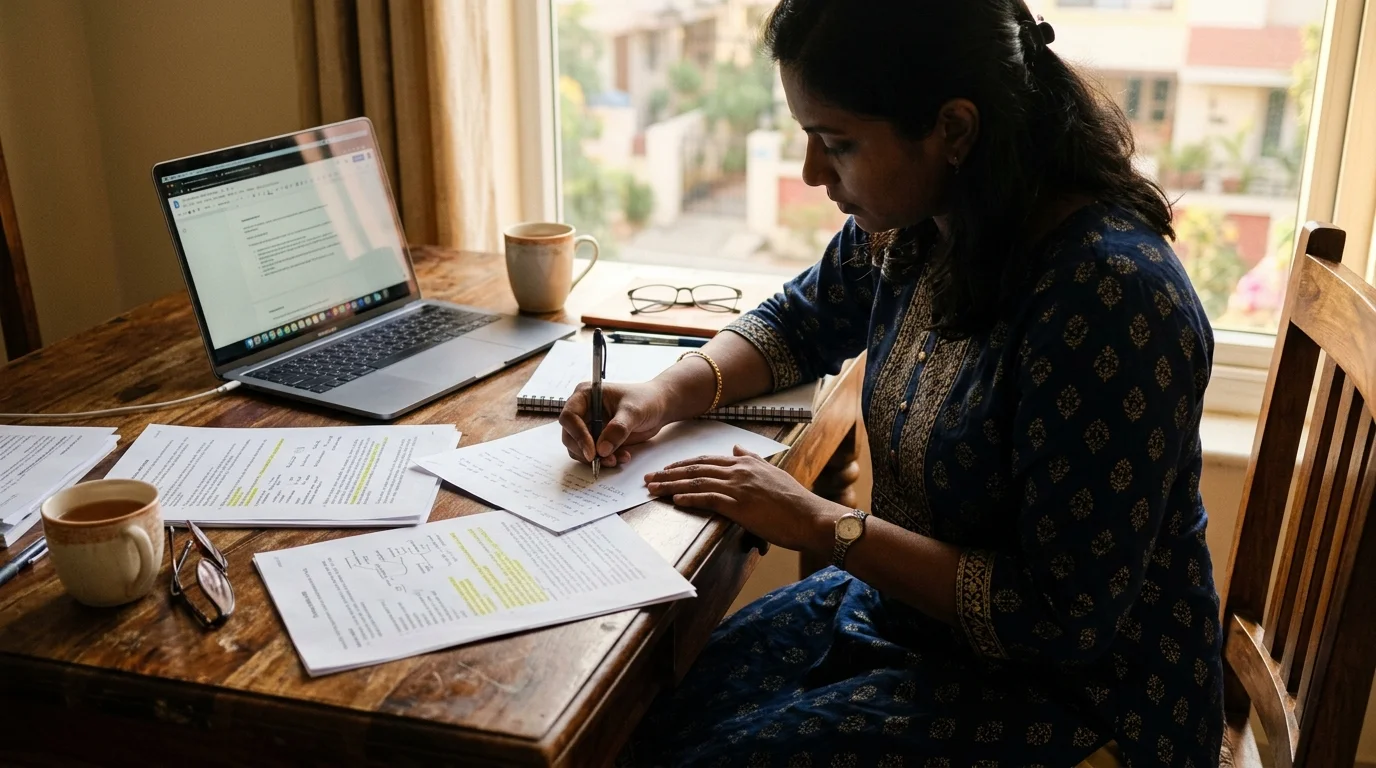
You've been at this for weeks. The flashcards are organized. The weak spots are color-coded. You can read through the list and nod at almost every answer. You're starting to feel ready.
Then a friend asks you: "What is the 'rule of law'?" Out loud, no cards in front of you. And there's a half-second pause you weren't expecting. The answer is there — you've read it — but nothing comes out. Is it one answer? Several? Do you need the exact wording?
That pause is exactly what the USCIS interview tests. Not whether you've seen the answers, but whether you can produce them, verbally, under mild pressure, in real time.
The most effective US citizenship practice test mirrors the real interview: spoken questions, spoken answers, no notes, slight time pressure. Every other format is useful, but this is the one that prepares you for what actually happens in the room. The good news is it takes less time than you'd expect to build this skill — if you practice the right way.
What the Actual Test Looks Like
The 2026 USCIS civics test draws from a bank of 128 questions. At your naturalization interview, the officer will ask you up to 20 of them. You need to answer 12 correctly to pass — that's a roughly 60% threshold. USCIS publishes the complete question-and-answer list along with free flashcards and audio recordings on their website.
The questions aren't random — they cover four categories: American Government (principles, branches, rights), American History (Revolutionary era through modern), Integrated Civics (geography, symbols, national holidays), and current-official questions (who is your state's Governor, who are your two US Senators, who is the current President). That last category changes with elections, so you need to verify those answers close to your interview date.
According to Pew Research Center, roughly 900,000 people naturalize as US citizens each year. The Census Bureau estimates there are more than 20 million naturalized citizens currently living in the US — every one of them passed this test. It's designed to be passable with consistent preparation, not to trip you up.
Why Passive Studying Falls Short
Most people default to reading: go through the list, read the answer, feel the recognition, move on. Recognition is a lower cognitive skill than recall. You can recognize "the Constitution" when you see it beside the question "What is the supreme law of the land?" — but recall means generating that answer from scratch, with no cues, when someone asks you out loud.
The interview is entirely recall-based. There's no multiple choice. No recognition cue. The officer asks, you answer. That's the entire format.
Passive studying also doesn't build the spoken fluency you need. Many applicants know the answers perfectly well but stumble in the interview because they've never practiced saying them. A question like "Name one war fought by the United States in the 1900s" has multiple accepted answers — World War I, World War II, the Korean War, the Vietnam War, the Gulf War. If you've only read them silently, deciding which to say and saying it clearly can feel harder than it should in the moment.
If you're working on building a full study schedule, the complete study plan for the citizenship civics test walks through an eight-week approach from first read-through to interview-week review.
How to Run an Effective Practice Session
The goal is to simulate the interview format as closely as possible. Here's a method that works:
1. No notes in front of you. Cover the answer column, close the booklet, put your phone face-down. You're training retrieval, not recognition.
2. Say the answer out loud. Not in your head — out loud. Speaking activates different neural pathways than reading or even thinking. You'll catch gaps you didn't know were there.
3. Give yourself a time limit. In the actual interview, you don't have 30 seconds to think through each answer. If the response doesn't come within about five seconds, mark it and move on. Those are your weak spots.
4. Use a practice partner if you can. Having someone read questions to you is closer to the real experience than reading them yourself. If that's not possible, record yourself asking the questions on your phone and play them back — or use an AI simulator that replicates the spoken format.
5. Mix up the order. The USCIS officer won't ask questions in the same sequence as the official list. Practice randomized order so you're not anchoring your memory to "which answer comes after the last one."
Practice Questions to Try Right Now
Here are five questions worth testing yourself on. Cover the answer, say your response out loud, then check.
USCIS Question: What is the supreme law of the land?
USCIS Question: What are the two parts of the U.S. Congress?
USCIS Question: What is the economic system in the United States?
USCIS Question: Name one war fought by the United States in the 1900s.
USCIS Question: Who was the first President?
Notice anything? The economic system question trips a lot of people — the instinct is to say "democracy," which is the political system, not the economic one. That's the kind of distinction that only surfaces when you test yourself cold.
How to Know You're Ready
You're ready when you can do this: someone reads you any of the 128 questions, in any order, and you can answer correctly within a few seconds — out loud, without hesitation — at least 90% of the time. That's a higher bar than the 60% you need to pass, but the buffer handles nerves. Anxiety costs you points you'd otherwise get right.
Run one full "mock interview" session in the final week before your appointment: 20 randomized questions, spoken answers, no notes. Score yourself honestly. If you're hitting 16 or more out of 20 consistently, you're ready. If there are still categories where you blank, that's where to focus your last few sessions.
Also make sure you know exactly what happens at your naturalization interview beyond the civics test — what documents to bring, how the English test works, what the oath ceremony looks like. The civics questions are one part of the appointment, and understanding the whole picture reduces interview-day anxiety significantly.
And if you're still worried about failing: the civics test failure process is kinder than most people expect. USCIS gives you a second chance within 60 to 90 days. Knowing the backup plan makes the first attempt feel less like a cliff edge.
The Simplest Practice Routine That Works
Fifteen minutes a day. No notes. Out loud. For the last three weeks before your interview.
That's it. Fifteen minutes of spoken practice beats two hours of silent reading every time, because you're training the exact skill that gets tested. You're not just learning the answers — you're learning to produce them on demand, under pressure, in a language that may not be your first.
By the time you walk into that room, the answers should feel automatic. Not because you memorized a list, but because you've already answered these questions hundreds of times — out loud, alone, at your kitchen table, getting a little better each day.
You've already done the work. Now practice saying it.
Practice These Questions Out Loud
Reading about the citizenship test and actually answering questions under pressure are different skills. FutureCitizen.us puts you in a simulated USCIS interview — a real AI officer asks the official questions, one at a time, just like your actual interview. Free, no signup required.
Start Free Practice →