You Worked Years to Become a Citizen. Here's What It Would Actually Take to Lose It.
Denaturalization is legally constrained, historically rare, and requires a federal court order. Here's what the law actually says — and what it cannot be used against you for.
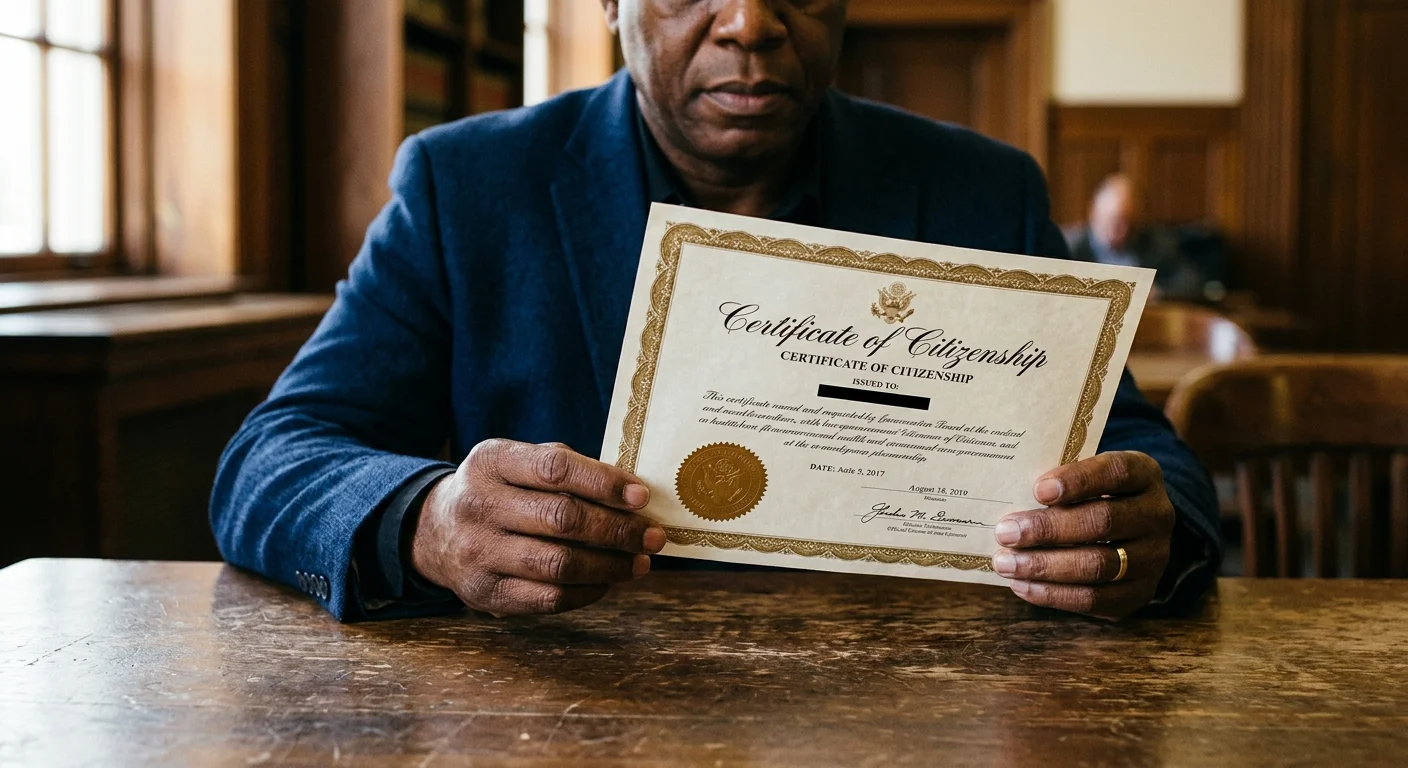
You've been reading the headlines. A citizenship revoked here, a deportation case there — people who had been citizens for years suddenly facing legal proceedings that could undo it all. The fear is understandable. If you're studying for naturalization right now, or if you recently took the oath, these stories land differently than they do for people who were born here.
The anxiety is real. The legal reality is more constrained than the headlines suggest.
Here's what US law actually says about when citizenship can be revoked — and equally important, what it cannot be used against you for.
The Short Answer
Yes, naturalized citizenship can technically be revoked. But it requires a federal civil court order, a high legal standard of proof, and evidence that your citizenship was obtained through fraud or misrepresentation at the time you applied. Opinions, speech, political views, and most post-naturalization conduct cannot legally serve as grounds for denaturalization under current US law.
In practice, denaturalization has been vanishingly rare. Between 1990 and 2017, the DOJ filed a total of 305 denaturalization cases — an average of 11 per year — according to the National Immigration Forum's denaturalization fact sheet. Even during the first Trump administration, when efforts intensified significantly, the average was 42 cases per year. Against a base of 23.8 million naturalized citizens in the United States as of 2022, those numbers represent a statistical near-zero.
What the Law Actually Requires
Denaturalization is governed by Section 340 of the Immigration and Nationality Act (INA § 340). It sets two main grounds for revocation:
1. Illegally procured citizenship. This means you were not legally eligible for naturalization at the time it was granted — for example, you didn't meet the residency requirement, hadn't maintained the required continuous residence, or were otherwise ineligible under the law at the time.
2. Procured by concealment or willful misrepresentation. This means you deliberately hid or lied about a material fact during your application — an arrest you didn't disclose, an identity you concealed, a prior deportation order you omitted from your N-400.
In both cases, the government must bring a formal civil lawsuit in federal district court. It bears the burden of proving the case by "clear, convincing, and unequivocal" evidence — one of the highest evidentiary standards in US law. You have the right to a lawyer, to contest the evidence, and to appeal.
The 14th Amendment to the Constitution, ratified in 1868, establishes citizenship as a constitutional right for those born or naturalized in the United States. While it doesn't make denaturalization impossible, it shapes the high bar courts require before that right can be stripped.
What the Supreme Court Said: Maslenjak v. United States (2017)
This is the most important recent case on denaturalization, and it limited the government's power considerably.
Divna Maslenjak was a Bosnian Serb refugee who became a naturalized US citizen. Years later, the government discovered she had given false answers on her asylum application — specifically about her husband's military service. She was denaturalized and prosecuted for making false statements on her naturalization application.
The Supreme Court ruled unanimously in her favor on the legal standard. Writing for the Court, Justice Elena Kagan held that the government cannot strip citizenship based on a false statement during naturalization unless it can show the misrepresentation actually mattered — that it had a causal connection to the grant of citizenship. A false answer that would not have changed the outcome cannot justify revocation.
This ruling matters: it means a technical error or omission on your N-400 — even an intentional one — doesn't automatically put your citizenship at risk if the concealed information wouldn't have affected whether you were approved. The government still carries the burden. You still have your day in court.
What Cannot Get You Denaturalized
This is where many applicants have the most fear — and where the law is, in fact, protective.
Political views and speech. The First Amendment protects speech and political beliefs for everyone on US soil, including naturalized citizens. Attending protests, criticizing the government, associating with political movements, or holding unpopular views cannot legally justify denaturalization. A naturalized citizen has the same free speech protections as someone born here.
Criminal activity after naturalization. If you commit a crime after you become a citizen, you face the same consequences any citizen would — arrest, prosecution, imprisonment. But naturalized citizenship itself cannot be stripped based on post-naturalization criminal conduct. The only exception is if that criminal conduct reveals that the original naturalization involved fraud — for instance, if a conviction uncovers an identity that was concealed at application time.
Travel, residence abroad, or dual citizenship. Living in another country, holding dual citizenship, or traveling extensively does not, by itself, endanger US citizenship. Voluntary relinquishment of citizenship requires a formal legal act with clear intent. The ACLU's Know Your Rights resource offers detailed guidance on what triggers citizenship loss and what doesn't.
The 2025–2026 Context
The current administration has significantly expanded denaturalization efforts compared to prior years. In 2025, the Department of Justice announced an initiative to review cases of naturalized citizens with undisclosed criminal histories — including fraud, terrorism-related offenses, and cases where investigators believe identity concealment occurred during the application process.
The focus has primarily been on cases involving people who failed to disclose serious criminal conduct — violent offenses, war crimes, material support for terrorism — that would have made them ineligible for naturalization. The Immigrant Legal Resource Center's know your rights resources have been updated to address questions around the expanded vetting environment.
None of this changes the underlying legal standard. The government must still go to federal court. You still have due process rights. The Maslenjak decision still applies. What has changed is the pace and prioritization of investigations — not the law itself.
What Operation Janus Found
Operation Janus, an ICE investigation spanning several years, was the largest systematic denaturalization effort in recent US history. Investigators found roughly 315,000 cases where fingerprint records for people who had been ordered deported or denied admission were not properly entered into federal databases — meaning some individuals who should have been ineligible may have naturalized under a different identity.
Of those 315,000 cases flagged for review, the government identified roughly 1,600 as priority cases. The number of actual denaturalizations that resulted was in the dozens — not hundreds, not thousands. The legal bar is high, the process is slow, and courts do not rubber-stamp government requests.
If You're Worried About Your Own Case
If you have anything in your history that you're uncertain about — a past arrest, an inconsistency in how you've reported your name or date of birth across documents, travel history that might look unusual, a relationship with someone who has had immigration problems — the right move is to consult an immigration attorney before your interview, not after.
Many attorneys offer free initial consultations. It is far better to know where you stand, disclose proactively if needed, and get accurate advice than to worry quietly and hope nothing surfaces. The USCIS citizenship page outlines the naturalization requirements and good moral character standards in plain terms.
For the vast majority of applicants — people who have lived honestly, disclosed accurately, and built their lives here in good faith — denaturalization is not a realistic risk. The legal system is built around the assumption that citizenship, once granted, is durable.
The goal of naturalization is to give you a permanent home. That permanence has legal teeth.
Two related articles worth reading together with this one: our breakdown of the birthright citizenship Supreme Court case, and what the 2026 USCIS background check process actually looks for — including what triggers a security hold and what doesn't. If you've been wondering about the opposite direction — voluntarily giving up citizenship — see our guide on what renouncing US citizenship actually costs and involves.
These rights sit within a broader constitutional framework — our guide to the three branches of government covers how separation of powers and judicial review underpin the citizenship protections described in this article. And when your interview date arrives? The civics test will be asking you about the very rights this article describes. Practice saying those answers out loud — the way you'll have to in the room.
The Civics Test Covers These Rights. Can You Answer Out Loud?
Questions about the 14th Amendment, citizenship, and the Supreme Court are on the real USCIS test. Our free simulator puts you in a realistic interview — an AI officer asks the actual questions one by one, just like your appointment. See how you do before it counts.
Try the Free Simulator →